Southern Thailand's Limestone Coast
Krabi sits on Thailand's Andaman coast, about 800 kilometers south of Bangkok. The province stretches along the mainland and includes over 150 islands offshore. Limestone cliffs rise straight from the sea, creating a landscape that looks almost sculptural. The town itself is modest and functional, serving as a base for travelers heading to the beaches and islands nearby.
Most visitors pass through Krabi town briefly before continuing to Ao Nang, Railay, or the islands. The town has a riverside night market, some local restaurants, and a more authentic Thai atmosphere than the beach areas. It's worth spending an evening here to see how a provincial Thai town operates away from the tourism infrastructure.
You can view Krabi's location on the map here.
Getting to Krabi
Krabi International Airport receives direct flights from Bangkok (about 1 hour 20 minutes), as well as some international routes from elsewhere in Asia; which ones fly changes by season, so check the airport's current schedule. From the airport to Ao Nang takes roughly 30 minutes by taxi or shuttle van.
Buses from Bangkok take 10-12 hours and run both day and night. The VIP buses are more comfortable and worth the extra cost for such a long journey. From Phuket you can travel by bus or minivan, or by boat; our guide to Phuket to Krabi compares the options.
Ferries connect Krabi to nearby islands and other coastal towns. The main pier is at Klong Jilad, about 4 kilometers from Krabi town. Boats run regularly to Koh Phi Phi (90 minutes), Koh Lanta (2 hours), and Phuket (the ferry runs via Phi Phi with a change of boat; operators also list faster speedboats of about 70 to 90 minutes). During monsoon season from June to October, some ferry services reduce frequency or stop altogether due to rough seas.
Speedboats offer a faster but pricier alternative, cutting travel time nearly in half. Private car hire is another option if you're traveling with a group or want flexibility. The drive from Bangkok takes about 12 hours on good roads, passing through several provinces in southern Thailand.
Railay Beach
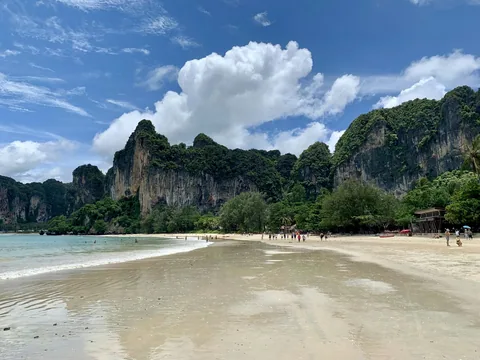
Railay sits on a peninsula south of Ao Nang, accessible only by boat due to the limestone cliffs that cut it off from the mainland. Long-tail boats from Ao Nang take 10 minutes and run frequently throughout the day. The peninsula has four main beaches: Railay West, Railay East, Phra Nang, and Tonsai.
Railay West has the best swimming beach with clear water and white sand. Railay East is more of a mangrove beach where the boats arrive, lined with budget accommodation and restaurants. Phra Nang beach, at the southern tip, has a cave shrine dedicated to a sea princess, where locals leave offerings. Tonsai attracts rock climbers and backpackers looking for cheaper lodging.
The cliffs around Railay draw rock climbers from around the world. There are over 700 bolted routes ranging from beginner to advanced. Several climbing schools offer courses and equipment rental. You can also hike to a viewpoint above Railay, though the trail is steep and requires some scrambling.
Ao Nang
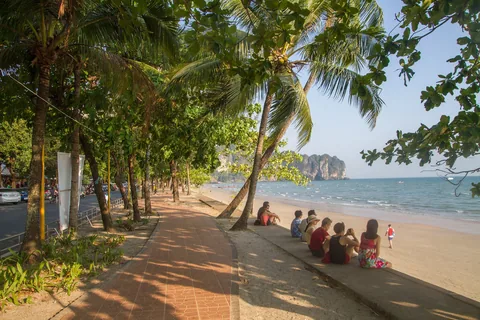
Ao Nang is the main beach resort area, about 20 kilometers from Krabi town. The beach itself is decent but not exceptional - the sand is somewhat coarse and the water can get murky. The real advantage is the infrastructure: hundreds of hotels, restaurants serving both Thai and international food, tour agencies, dive shops, and rental services all clustered along a few streets.
Most tours to the islands and beaches depart from Ao Nang. The area works well as a base because everything is walkable and prices are generally lower than on the islands. The night market near the mosque offers cheap street food and the usual tourist items. For a quieter alternative, Nopparat Thara beach extends north from Ao Nang with more space and shade from casuarina trees.
The Four Islands
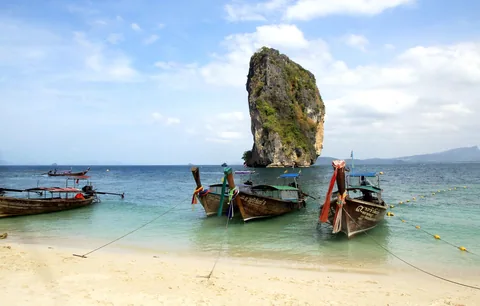
The Four Islands tour is the standard day trip from Ao Nang, visiting Koh Poda, Koh Tup, Koh Mor, and Phra Nang cave beach. At low tide, you can walk between Koh Tup and Koh Mor on an exposed sandbar. Koh Poda has clear water for swimming and snorkeling around the coral near the rocks. These tours run daily and typically include lunch, snorkeling equipment, and hotel pickup.
Koh Hong, about an hour by speedboat, has a large lagoon surrounded by cliffs. The water inside is calm and good for kayaking. Several tour operators offer kayaking trips into the lagoon and surrounding caves. The island also has a beach where boats stop for lunch and swimming.
National Parks
Than Bok Khorani National Park lies about 45 minutes north of Krabi town. The main feature is a series of emerald pools fed by mineral-rich springs. You can swim in the larger pools, though the water is cool year-round. A trail leads up to more pools and a small waterfall. The park also has caves, though you need a guide to explore the deeper sections.
Khao Phanom Bencha National Park, about 30 kilometers north of Krabi, has several waterfalls. Huay To waterfall is the most accessible, with 11 tiers. The trail to the top takes 2-3 hours through forest. The park has basic bungalows if you want to stay overnight and hike early in the morning before it gets hot.
Rock Climbing and Caving
Beyond Railay, there are climbing areas at Tonsai, Ao Nang Tower, and various spots inland. The limestone here is sharp and pocketed, offering good holds. Most routes face west, so climbing is best in the morning before the afternoon heat. Climbing shops in Ao Nang and Railay rent equipment and organize guided climbs for beginners.
Several caves in the area have prehistoric paintings and archaeological sites. Tham Phet cave has paintings estimated to be 3,000 years old. You'll need a local guide to find these caves as they're not well marked. Some caves require swimming through sections of water, so bring appropriate clothing.
Where to Stay
Ao Nang makes practical sense for most visitors. It has accommodation at all price points, from hostels to upscale resorts. The northern end near Nopparat Thara is quieter. Book in advance during high season (November to March) as places fill up.
Railay has more expensive accommodation since everything needs to arrive by boat, increasing costs. The area appeals to people who want to stay somewhere without roads and vehicles. Budget places exist on Tonsai and Railay East, while Railay West has mid-range and upscale resorts.
Krabi town is the cheapest option and gives you a more local experience. Several guesthouses along the river offer simple rooms. The town is fine for a night or two, but most people prefer staying near the beach.
Koh Lanta, about 70 kilometers south, offers a more laid-back alternative if you want to escape the crowds in Ao Nang. The island has long beaches, mostly on the west coast, and a slower pace. Ferry from Krabi takes about two hours, or you can drive and take the short car ferry.
Local Culture and Religion
Krabi province has a large Muslim minority, especially in the coastal areas. You'll notice mosques throughout the region and hear the call to prayer five times daily. Dress modestly when away from the beach areas - covering shoulders and knees shows respect. Many restaurants close during Ramadan, though tourist areas generally continue operating normally.
The night market near Ao Nang's mosque serves excellent Muslim Thai food, including roti, massaman curry, and various grilled items. These dishes reflect the blend of Malay and Thai influences common in southern Thailand. The market operates every evening and gets crowded around sunset when locals come to eat.
Buddhist temples exist throughout the province as well. Tiger Cave Temple (Wat Tham Seua), about 9 kilometers from Krabi town, has 1,237 steps leading to a summit with views across the province. The climb takes 30-45 minutes and is quite steep. Start early to avoid the heat. Monks at the temple follow strict meditation practices, and visitors should remain quiet in the monastery areas.
Practical Considerations
The dry season from November to April offers the most reliable weather. December and January are peak months with higher prices and more crowds. The monsoon season from May to October brings afternoon rain and rough seas. Some islands close or reduce services during this period. September and October typically see the heaviest rainfall.
ATMs are widely available in Ao Nang and Krabi town but scarce on smaller islands. Many tour operators and restaurants accept cash only, so withdraw enough before heading to remote areas. Credit cards work at larger hotels and some restaurants.
Renting a scooter costs 200-300 baht per day in Ao Nang. An international driving permit is technically required, and police do set up checkpoints, especially on the road to the airport. Wear a helmet - both for safety and to avoid fines. The roads are generally in good condition, though traffic can be heavy between Ao Nang and Krabi town.
Most tour companies are legitimate, but book through established shops with physical locations rather than beach touts. Prices for similar tours vary little, so aggressive discounts might indicate cut corners on safety or service. For diving trips, check that operators are certified by PADI or SSI.
The sea around Krabi has box jellyfish during certain months, mainly April to October. Most beaches post warning signs when they're present. If stung, pour vinegar on the affected area and seek medical attention. The local hospitals in Ao Nang and Krabi town can treat jellyfish stings and other common travel ailments.
Sunscreen labeled as reef-safe is worth buying or bringing with you. Regular sunscreen damages coral reefs, and several marine parks have banned non-reef-safe products. You can buy reef-safe brands in larger shops in Ao Nang, though they cost more than regular sunscreen.