
Destinations in Thailand
From Bangkok's temples and street food to the mountains of the north and the limestone coast of the south: where to go in Thailand, and what each place is really like.
Thailand's main cities and destinations fall into five broad regions: Bangkok and the central plains, the mountainous north around Chiang Mai, the north-east (Isaan), the beach towns of the east and Gulf coast, and the south with Phuket and Krabi. Most first trips combine Bangkok, one northern city and one stretch of coast.
Administratively Thailand has 76 provinces plus Bangkok, which is run as a special city of its own. Travelers rarely need that map. What matters is the region, because it decides the landscape, the food, the season and how you get there. Below we explain the regions, how to choose between the cities in this section, and the routes most people follow. Each card further down this page leads to a full destination guide.
The regions and their cities
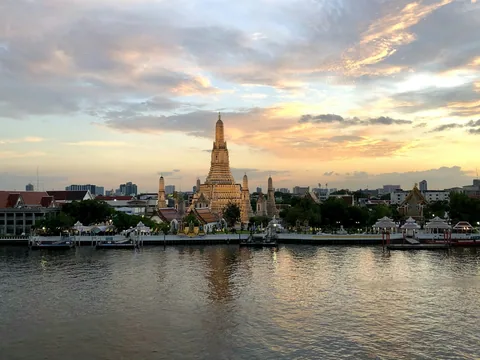
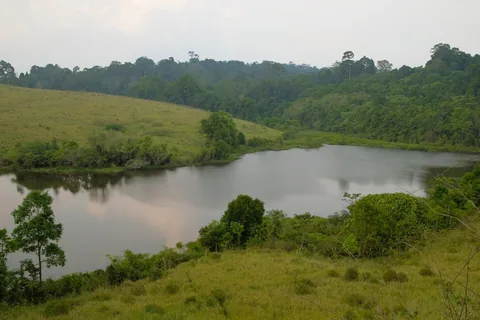
Bangkok and the central plains. Bangkok is where almost every trip starts, with the Grand Palace, the river, street food and the country's main airports. North of it, Ayutthaya was founded around 1350, became Siam's capital after Sukhothai and was destroyed by Burmese armies in the 18th century; its ruins are a UNESCO World Heritage Site, and it is an easy day trip by train. To the west, Kanchanaburi combines the Death Railway and the bridge over the River Kwai with waterfalls and jungle. Khao Yai, the national park north-east of Bangkok, is listed in this section too, and it reopened on 6 October 2026 after a flood closure, with the Khao Khiao road and Kaeng Hin Phoeng still shut, so check its status before you plan around it.
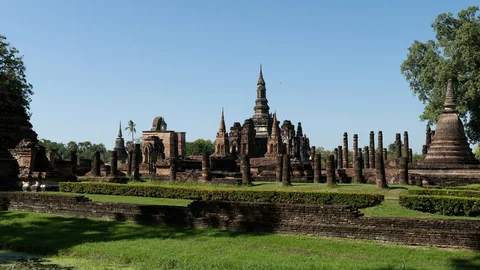
The north. Chiang Mai is the north's main city: a walled old town full of temples, cooking schools, markets and the mountains on its doorstep. Chiang Rai, further north, is smaller and known for the White Temple and the Golden Triangle area. Pai is a valley town in the hills towards Mae Hong Son, reached by a famously winding road. Sukhothai, on the way north, protects the ruins of an earlier Thai capital, inscribed by UNESCO in 1991 together with Si Satchanalai and Kamphaeng Phet.
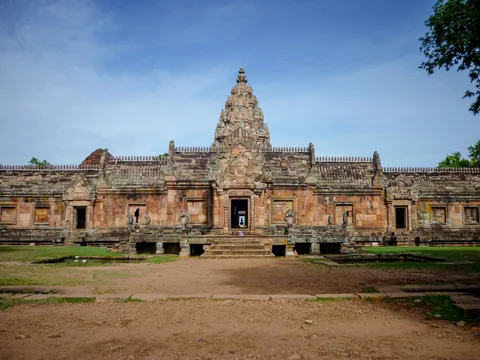
Isaan, the north-east. The large plateau between Bangkok, Laos and Cambodia sees fewer foreign visitors than any other region. Isaan is the place for Khmer temples, Mekong river towns such as Nong Khai, and the food many Thais consider the country's best. Note that the UK government advises against all but essential travel within 20 km of the Cambodian border (as of October 2026), which affects border areas of provinces such as Surin, Si Sa Ket, Buriram and Ubon Ratchathani.
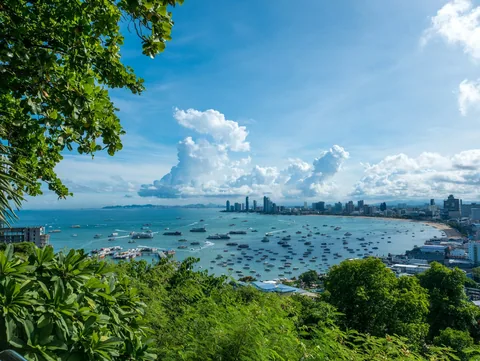
The east and the Gulf coast. Pattaya is Bangkok's nearest big beach resort, loud in the center and calmer at Jomtien and Pratumnak. On the western shore of the Gulf, Hua Hin is a quieter seaside town with a long royal history, popular with families, golfers and long-stay retirees.
The south. Phuket, Thailand's largest island, is listed here because it works like a city, with its own airport, old town and a dozen beach areas. Across Phang Nga Bay, Krabi is the base for Ao Nang, Railay and the limestone islands. North of Phuket, Khao Lak is the quieter beach strip for the Similan Islands and Khao Sok National Park. Hat Yai, near the Malaysian border, is the south's commercial hub and a common entry point for visitors from Malaysia and Singapore. For the beach islands themselves, Koh Samui, Koh Lanta, Koh Lipe and the rest, see our separate guide to the Thai islands.
How to choose: match the place to the trip
Start with what you want most, then check the season. Every region has a good and a bad time of year, and they do not all line up.
- Temples, history and food: Bangkok, Ayutthaya, Sukhothai and Chiang Mai. These are good from November to February, when it is cooler and drier.
- Mountains and slower days: Chiang Mai, Chiang Rai and Pai. Avoid the smoky season, roughly February to April, when crop and forest burning brings haze to the north.
- Beaches without a boat transfer: Phuket, Krabi (Ao Nang), Khao Lak, Hua Hin and Pattaya. The Andaman coast (Phuket, Krabi, Khao Lak) is at its best from about December to March and rough from May to October.
- Off the tourist trail: Isaan, Sukhothai and the smaller towns of the north.
- A short break from Bangkok: Ayutthaya, Kanchanaburi, Hua Hin or Pattaya, all reachable by road or rail in a few hours.
Be realistic about distance. Thailand is long, and the north and the far south are a night train or a domestic flight apart. Three bases in two weeks is comfortable; five means you spend much of the trip in transit.
Typical routes for a first trip
One week: three or four nights in Bangkok with a day trip to Ayutthaya, then either three nights in Chiang Mai or three nights on the coast at Hua Hin or Pattaya.
Two weeks, north and south: Bangkok (three nights), Chiang Mai (four nights, with a day in Chiang Rai or a detour to Pai), then a flight south to Phuket or Krabi for the rest. This is the classic route, and it works best between November and March, when both the north and the Andaman coast are in season.
Two weeks, overland: Bangkok, Ayutthaya and Sukhothai by train or bus, then on to Chiang Mai and Chiang Rai. Long-distance trains to the north and north-east now leave from Krung Thep Aphiwat Central Terminal, not the old Hua Lamphong station.
Three weeks or more: add Isaan and the Mekong, Kanchanaburi, or a second beach area. Visitors on the 30-day visa exemption (the standard stay for most Western and many Asian passports since 15 September 2026) should plan any trip longer than four weeks around that limit.
Bangkok
Photos in this list: photographer and licence for each image are listed on our image credits page.
Northern Thailand

Chiang Mai
The cultural capital of the north: old city temples, night markets, mountain day trips and the burning season you should plan around.

Chiang Rai
The White Temple, the Golden Triangle and a calmer northern town that works as a base or a day trip from Chiang Mai.
Pai
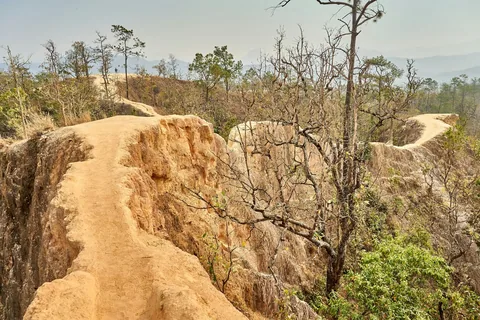
A small valley town in Mae Hong Son province, known for canyon sunsets, hot springs and the 762-curve road that gets you there.
Sukhothai
The first Thai kingdom's ruined capital, best explored by bicycle at sunrise.
Photos in this list: photographer and licence for each image are listed on our image credits page.
Central Thailand

Ayutthaya
Temple ruins of the old Siamese capital, an easy day trip north of Bangkok by train, boat or van.
Kanchanaburi
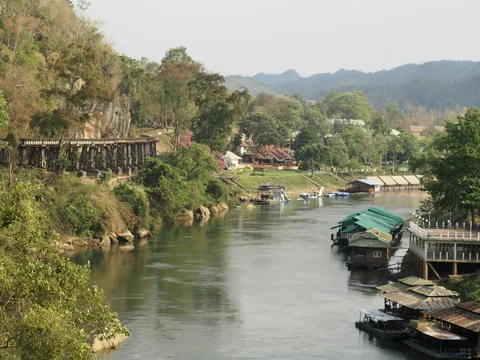
The Bridge over the River Kwai, the Death Railway and Erawan's seven-tier waterfall, three hours west of Bangkok.

Hua Hin
The royal beach town on the Gulf, popular with families, golfers and long-stay visitors, a few hours south of Bangkok.
Khao Yai
Thailand's oldest national park, with wild elephants and waterfalls three hours from Bangkok.
Photos in this list: photographer and licence for each image are listed on our image credits page.
East Coast
Photos in this list: photographer and licence for each image are listed on our image credits page.
South & Andaman Coast
Phuket
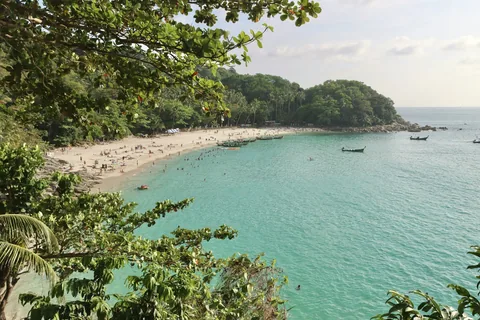
Thailand's largest island and its busiest beach destination: which beach to stay on, getting around safely and day trips by boat.
Krabi
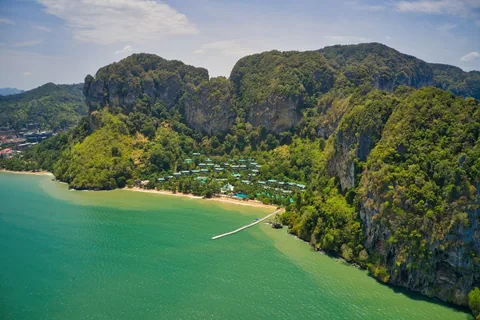
Limestone cliffs, Railay, island tours and Ao Nang's beach strip on the Andaman coast.
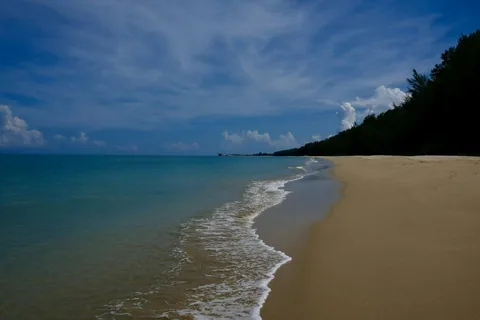
Khao Lak
Long, quiet beaches north of Phuket and the gateway to the Similan Islands.
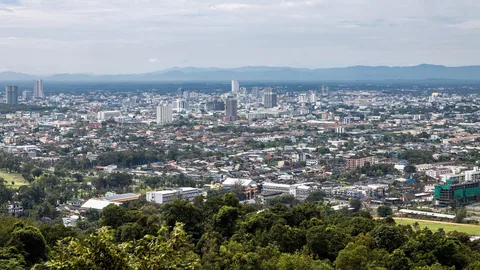
Hat Yai
The south's commercial hub, a weekend favorite for visitors from Malaysia and Singapore.
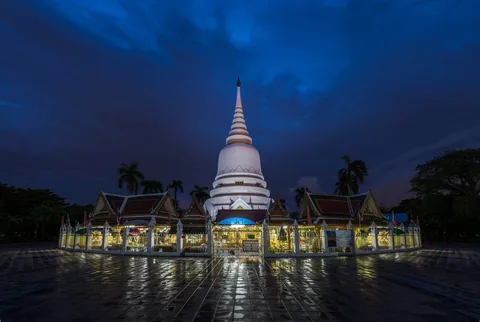
Nakhon Si Thammarat
The old southern capital of Buddhism, home of Thailand's newest UNESCO World Heritage Site and the Bun Sart Duean Sip festival.
Photos in this list: photographer and licence for each image are listed on our image credits page.
Isaan
Photos in this list: photographer and licence for each image are listed on our image credits page.