Chiang Rai occupies the northernmost corner of Thailand, where the borders of Thailand, Myanmar, and Laos converge. The city sits in a valley surrounded by mountains, about 180 kilometers northeast of Chiang Mai. Founded in 1262 by King Mengrai, it predates its larger neighbor and served as a capital before the kingdom moved south.
The city today feels more relaxed than Chiang Mai, with less traffic and tourist infrastructure. Most visitors come for the temples, particularly the White Temple that has become one of Thailand's most photographed buildings. The surrounding province offers hill tribe villages, tea plantations, mountain viewpoints, and access to the Golden Triangle where three countries meet at the Mekong River.
You can view Chiang Rai's location here.
Getting to Chiang Rai
Mae Fah Luang Chiang Rai International Airport has multiple daily flights from Bangkok (1 hour 20 minutes). Several carriers operate this route, so prices stay competitive. Direct flights also connect from Phuket, Chiang Mai, and occasionally from Chinese cities. The airport sits 8 kilometers from the city center, about 15 minutes by taxi.
Buses from Bangkok's Mo Chit terminal take 11-13 hours depending on stops. Overnight buses arrive early morning, which can be inconvenient if your accommodation isn't ready. VIP buses cost more but provide reclining seats and onboard bathrooms. Most long-distance buses use Bus Terminal 2, about 5 kilometers south of the city center; Bus Terminal 1 is in town.
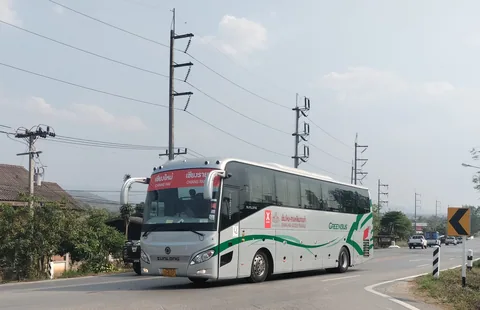
From Chiang Mai, the Green Bus company runs frequent services taking 3-4 hours. The route passes through mountains and agricultural areas. Minivans are faster at around 2.5 hours but cramped for long legs. Some people rent cars or motorcycles in Chiang Mai and drive north, which takes about 3 hours on Route 118 or Route 1019.
The train network doesn't reach Chiang Rai. The nearest station is in Chiang Mai, then you need to continue by bus or car. A new Den Chai–Chiang Rai–Chiang Khong railway has been under construction since 2022, but it will be several years before trains reach the city.
Wat Rong Khun
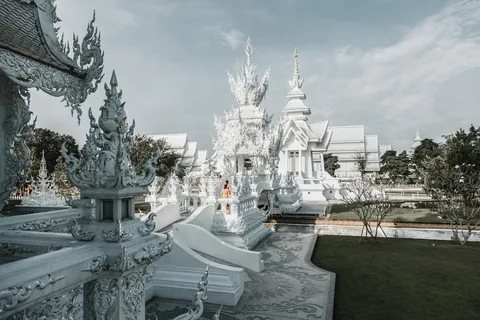
The White Temple sits 13 kilometers south of Chiang Rai on the road to Chiang Mai. Artist Chalermchai Kositpipat began construction in 1997 and continues adding to it. Unlike traditional Thai temples, this one uses white plaster and mirrored glass that reflects light in all directions. The effect is striking, especially in morning light.
The bridge leading to the main building represents crossing from the cycle of rebirth into Buddhism. Hundreds of sculpted hands reach up from below, symbolizing desire. Inside, the murals mix Buddhist imagery with modern pop culture references - everything from Neo in The Matrix to Hello Kitty. Photography isn't allowed inside the main hall.
Foreign visitors pay an entry fee of 200 baht (since 1 January 2026). The temple complex includes a golden building that houses restrooms (perhaps the most ornate bathrooms in Thailand), an art gallery showing Chalermchai's other work, and various sculptures scattered across the grounds. Arrive early before tour groups arrive around 10am. It is generally open from 8am to 5:30pm, with last entry around 5pm.
Wat Rong Suea Ten
The Blue Temple was completed in 2016 by Phuttha Kabkaew, a student of the White Temple's creator. It sits about 3 kilometers north of the city center. The entire structure uses deep blue paint with gold accents. A large white Buddha sits inside beneath a blue ceiling covered in detailed paintings.
The naga serpents flanking the stairs are particularly elaborate. The interior feels more cohesive than the White Temple, sticking to traditional Buddhist imagery without modern additions. Entry is free and photography is allowed everywhere except when monks are praying. The temple is less crowded than Wat Rong Khun, making it easier to appreciate without fighting through tour groups.
The Clock Tower and Night Bazaar
The golden clock tower stands at a roundabout in the city center, designed by the same artist who created the White Temple. At 7pm, 8pm, and 9pm each evening, it puts on a light and sound show lasting about 10 minutes. The colors change and music plays from speakers around the roundabout. It's brief but worth seeing if you're nearby.
The night bazaar operates every evening about 500 meters north of the clock tower. It's smaller and less touristy than Chiang Mai's night market. You'll find hill tribe handicrafts, clothing, local snacks, and the usual mix of products. Several food stalls serve northern Thai dishes. Prices require negotiation, though they're already lower than in larger tourist cities.
A walking street market operates on Saturday evenings along Thanalai Road, similar to Chiang Mai's Sunday market but less crowded. Locals sell handicrafts, clothes, and street food. This market feels more authentic than the nightly bazaar.
Golden Triangle
The point where Thailand, Myanmar, and Laos meet sits about 60 kilometers north of Chiang Rai, roughly 1.5 hours by car. The area got its name from opium production that once dominated the region's economy. The Hall of Opium museum explains this history without glorifying it, showing how the trade affected local communities.
You can take boat trips on the Mekong River from Sop Ruak, the village at the confluence point. Long-tail boats cross to a small Laotian market where vendors sell beer, snacks, and souvenirs. The market exists purely for this day-trip trade. Some tours include a stop at a casino on the Laotian side, which feels incongruous with the rest of the area.
Several viewpoints offer photo opportunities of the three countries. The giant golden Buddha statue on a hill provides the best vantage point. The area gets quite commercial with souvenir shops and restaurants catering to tour buses, but the geography itself remains impressive.
Mae Sai
Thailand's northernmost town sits on the Myanmar border, about 60 kilometers from Chiang Rai. The border crossing leads to Tachileik on the Myanmar side, but we no longer recommend crossing: as of October 2026 the UK government advises against all but essential travel to that part of Shan State and names Tachileik township as a location of cyber-scam centres. The Thai side of the border is a different matter and easy to visit.
The border market on the Thai side sells similar goods. Prices are slightly higher but you avoid the border crossing hassle. A temple on a hill above Mae Sai offers views across both countries. The town itself serves mainly as a transit point. It is not a place for a visa border run: the crossing leads into an area the UK government advises against visiting.
Doi Tung and Mae Fa Luang Garden
Doi Tung mountain reaches 1,800 meters and sits about 45 kilometers north of Chiang Rai. The late Princess Mother lived here part-time from 1988 until her death. Her residence, though modest, sits in elaborate gardens designed by landscape architects. The Mae Fa Luang Garden combines European formal gardens with tropical plants, creating an unusual aesthetic.
The Royal Villa requires appropriate dress - no shorts or sleeveless shirts. You remove shoes before entering. The house itself is less interesting than the gardens, but the package ticket includes both. A café serves decent coffee from beans grown on Doi Tung. The development project here helped local hill tribes transition from opium growing to coffee and handicraft production.
The road to Doi Tung winds through mountains with steep drops and sharp curves. Drive carefully, especially during foggy mornings. The temperature drops noticeably at higher elevations, so bring a light jacket even in hot season.
Hill Tribe Villages
Several ethnic minority groups live in the mountains around Chiang Rai, including Akha, Karen, Lahu, and Lisu peoples. Many villages welcome tourists, though visiting raises ethical questions. Some communities have become tourist attractions where people dress in traditional clothing primarily for photos. Other villages integrate visitors more naturally into daily life.
If you want to visit, go with a guide who has established relationships with specific communities and ensures money goes directly to villagers rather than just tour operators. Avoid villages that feel like human zoos. Some homestay programs let you stay overnight, cook with families, and learn about traditional practices. These experiences feel more genuine than brief photo stops.
The Hilltribe Museum in Chiang Rai city center provides context about different groups' histories, languages, and cultures. It's worth visiting before heading to villages so you understand what you're seeing. Entry costs 50 baht and includes informative displays and short films.
Phu Chi Fa
This mountain viewpoint sits on the Thai-Laos border about 140 kilometers from Chiang Rai, roughly 2.5 hours by car. Most people arrive before dawn to watch sunrise over the mountains. The walk from the parking area to the viewpoint takes about 30 minutes up a moderate trail. Cliffs drop sharply on one side, creating dramatic views across layers of mountains fading into the distance.
Between November and February, mist often fills the valleys at sunrise, creating a sea of clouds. The temperature drops to 5-10 degrees Celsius on winter mornings, cold by Thai standards. Bring warm clothes and a flashlight for the predawn walk. A small market at the parking area sells hot coffee and simple breakfast items.
The drive to Phu Chi Fa is long for a day trip. Some people stay overnight in Doi Pha Hom Pok National Park nearby or in one of the small resorts in the area. The route passes through rural agricultural areas with views of fields and mountains.
Singha Park
This 3,000-acre agricultural park sits about 12 kilometers southwest of Chiang Rai. Singha beer company owns it and uses the land for barley, tea, and fruit production. A lake in the center is surrounded by fields and flower gardens. You can rent bicycles or take a tram around the property.
A zip line course runs through one section of the park. The tea plantation offers tours explaining the growing and processing. There's a petting zoo with sheep, alpacas, and giraffes, which feels somewhat random but appeals to families with children. Entry is free, though activities cost extra.
The park works well as a half-day trip, especially if you want something relaxing between temple visits. The views across the fields to mountains in the background are pleasant, though it's not essential if you're short on time.
Where to Stay
The city center offers the most convenience, with walking access to night markets, restaurants, and the Blue Temple. Hotels range from budget guesthouses at 300-500 baht per night to mid-range hotels at 1,000-2,000 baht. Boutique hotels have opened in converted traditional houses, offering more character than chain hotels.
The area near the clock tower is central but can be noisy from traffic. Side streets just off the main roads provide quieter options while remaining convenient. Book ahead during high season (November to February) and during Loy Krathong and Songkran festivals.
If you want a resort experience, several properties sit outside the city in more rural settings. These work well if you have your own transport but make getting to restaurants and attractions less convenient. Some resorts near tea plantations offer mountain views and cooler temperatures.
Local Food
Northern Thai cuisine differs from central and southern styles, using less coconut milk and more herbs. Khao soi, a curry noodle soup with crispy noodles on top, appears on most menus. Sai oua, a spicy herb sausage, is another regional specialty. Nam ngiao, a tomato-based noodle soup with pork, is less common outside the north.
The morning market near the bus station operates from about 5am to 9am, selling fresh produce, meats, and prepared foods. Several vendors sell khao tom (rice soup) and jok (congee) for breakfast. This is where locals shop and eat, with minimal English but friendly service.
Muslim restaurants cluster near the mosque, serving khao mok gai (chicken biryani) and roti. Chinese-Thai restaurants serve morning dim sum. The night market has various grilled items, pad thai, and fruit shakes. Restaurant prices throughout Chiang Rai remain lower than in Bangkok or Phuket.
Practical Information
The cool season from November to February is most comfortable, with temperatures ranging from 15-28 degrees Celsius. December and January nights can drop to 10 degrees in the city and near freezing in the mountains. Hot season from March to May sees temperatures above 35 degrees, with April being hottest. Rainy season runs June to October, with September typically the wettest month.
Renting a scooter costs about 200 baht per day, though mountain roads require confident riding skills. Steep grades, sharp curves, and occasional gravel patches make some routes challenging. Cars rent for 1,000-1,500 baht per day. An international driving permit is required. Tuk-tuks and songthaews (shared pickup trucks) operate within the city for short trips.
ATMs are common in the city center. Most tourist sites accept only cash. Credit cards work at hotels and some restaurants. Exchange rates at banks beat those at hotels and airports.
The city is small enough to walk around the center, though distances to outer temples and attractions require transport. Traffic is lighter than Chiang Mai, making driving less stressful. Parking is usually easy to find and often free.
Chiang Rai is majority Buddhist with Muslim and Christian minorities. Temples expect modest dress and shoe removal before entering buildings. Women should avoid touching monks or handing items directly to them. The city feels more conservative than beach destinations, though tourists are common enough that local people are used to foreign visitors.
Malaria risk exists in rural border areas, though not in the city. Dengue fever occurs during rainy season. Use mosquito repellent if spending time outdoors. The government hospital in Chiang Rai handles most medical issues. Several pharmacies in the city center sell common medications without prescription.
Chiang Rai works well as a base for exploring northern Thailand. The slower pace compared to Chiang Mai appeals to people who want temples and culture without the crowds. Most visitors spend 2-4 days here before continuing to other destinations or combining it with time in Chiang Mai.