Ayutthaya is one of the most rewarding places to visit in Thailand for travelers who want more than beaches, shopping malls, and nightlife. Located north of Bangkok, this former capital offers a very different side of the country. The city is known for temple ruins, old royal history, riverside life, and a quieter atmosphere than the capital. For many visitors, Ayutthaya becomes the place where Thailand’s past feels real in a way that is harder to grasp in modern Bangkok.
What makes Ayutthaya stand out is the contrast between old and new. On one side, you have brick ruins, crumbling stupas, Buddha images, and traces of a once powerful kingdom. On the other, you have a living Thai city with markets, roads, cafés, local neighborhoods, and everyday life moving on around the historical park. That mix is part of what gives Ayutthaya its character.
For tourists staying in Bangkok, Ayutthaya is also one of the easiest and most interesting trips to make. It can work as a day trip, but it is also a place where an overnight stay makes sense if you want more time to explore the ruins, museums, river views, and local food without rushing.
The history of Ayutthaya
Ayutthaya was once the capital of the Kingdom of Siam and one of the most important cities in Southeast Asia. It was founded in the 14th century and remained the capital for more than 400 years. During that period, Ayutthaya developed into a major center of trade, religion, diplomacy, and royal power. Merchants and envoys from many parts of Asia, the Middle East, and Europe came to the city, which helped make it wealthy and internationally connected.
At its height, Ayutthaya was a grand capital with temples, palaces, canals, and busy commercial districts. Foreign visitors described it as a large and impressive city. Its location between rivers helped both with trade and defense, and it became one of the strongest powers in the region.
That period came to an end in 1767, when the city was destroyed during the Burmese invasion. Large parts of Ayutthaya were burned or ruined, and the capital was later moved elsewhere. What remains today are the ruins of monasteries, temple complexes, defensive structures, and other historic sites spread across the old city.
That destruction is one of the reasons Ayutthaya leaves such a strong impression. This is not a reconstructed heritage park built for tourists. It is a real historical landscape where traces of a lost capital still remain in brick, stone, and broken towers.
What Ayutthaya is like today
Modern Ayutthaya is not just an archaeological site. It is a functioning city with local traffic, schools, shops, guesthouses, markets, and riverside restaurants. Visitors who expect a museum-like destination can be surprised by how normal parts of the city feel. You can spend the morning among temple ruins and later sit down for lunch near local streets where daily life continues as usual.
That is part of the appeal. Ayutthaya does not feel as polished or as staged as some tourist destinations. It feels lived in. The old capital sits within a modern Thai setting, and that gives the city a grounded atmosphere.
The pace is also different from Bangkok. Even when there are tourists around the most famous ruins, Ayutthaya usually feels calmer. The roads are easier to understand, distances are manageable, and there is less sensory overload. That makes it attractive for travelers who want culture and history without the intensity of a major metropolis.
What is Ayutthaya known for?
Ayutthaya is best known for its temple ruins and royal history, but that is only part of the picture. The city is also known for its river setting, old trade importance, and distinct atmosphere. It is one of the best places in Thailand to understand how powerful and sophisticated Siam once was.
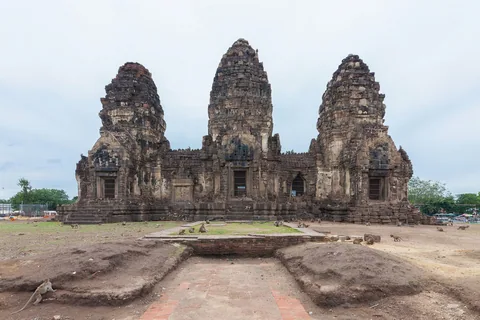
Many visitors associate Ayutthaya with iconic images of red brick ruins and Buddha statues framed by tree roots and broken towers. The city is also known for cycling between historical sites, taking boat rides around the island area, and seeing major temple compounds spread out across a surprisingly large area.
Food is another part of the city’s identity. Ayutthaya has a reputation for local dishes and river prawns, and many travelers combine sightseeing with long lunches by the water. That makes the city more than a pure history stop.
Famous attractions in Ayutthaya
There are many ruins and temple sites in Ayutthaya, but a few places are especially well known and worth prioritizing.
Wat Mahathat
Wat Mahathat is probably the most famous temple in Ayutthaya. It is widely recognized because of the Buddha head entwined in tree roots, one of the most photographed sights in Thailand. That image alone brings many people here, but the wider site is worth exploring as well. You will see ruined prangs, walls, courtyards, and the remains of what was once a major religious complex.
Even with many visitors, Wat Mahathat usually still feels impressive because the site gives a strong sense of age and loss. It is not difficult to imagine how important this place once was.
Wat Phra Si Sanphet
This is one of the most important historical sites in Ayutthaya and was part of the old royal palace area. It is especially famous for its three large chedis, which are among the most recognizable structures in the city. The setting is open and elegant, and it helps visitors understand the ceremonial and royal side of old Ayutthaya.
Wat Phra Si Sanphet is often one of the highlights for travelers who want to see the grand scale of the former capital. It feels more formal and monumental than some of the other temple ruins.
Wat Ratchaburana
Wat Ratchaburana is another major site and is known for its central prang and detailed remains. It is often appreciated by visitors who want a temple ruin with strong visual character. The structure is striking, and the layout gives a good sense of how temple architecture in Ayutthaya once looked.
Compared with some of the broader ruin fields, this site can feel a bit more compact, which some visitors prefer.
Wat Chaiwatthanaram
Located slightly outside the core historical area, Wat Chaiwatthanaram is one of the most beautiful temples in Ayutthaya, especially late in the day when the light softens. The temple stands beside the river and has a dramatic layout with a central prang and surrounding structures. It is one of the places where Ayutthaya feels especially photogenic.
This is also one of the best sites for travelers who want strong views and a more atmospheric setting. Around sunset, it can be one of the most memorable places in the city.
Wat Yai Chai Mongkhon
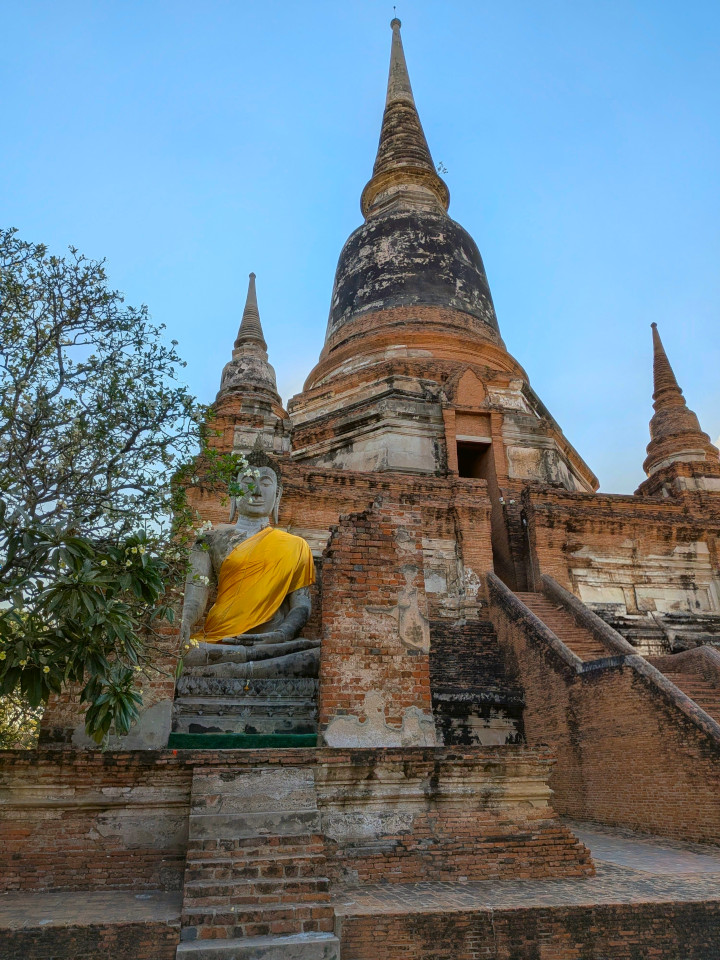
Wat Yai Chai Mongkhon is known for its large chedi and rows of seated Buddha statues draped in saffron cloth. It feels more active and visually complete than some of the heavily ruined sites, which makes it a good contrast during a day of sightseeing. There is also a more open and accessible feel here, which many first-time visitors like.
Ayutthaya Historical Study Centre and museums
If you want context rather than only ruins, it is worth visiting a museum or study center in Ayutthaya. Seeing temple remains without understanding the city’s past can limit the experience. A museum visit helps explain the political importance of the kingdom, how the city was organized, and why Ayutthaya mattered so much in regional history.
This is especially useful if Ayutthaya is one of your first historical destinations in Thailand.
How to travel from Bangkok to Ayutthaya
Getting from Bangkok to Ayutthaya is fairly simple, which is one reason the city is so popular. There are several ways to make the trip, and the best option depends on your budget, schedule, and travel style.
Train from Bangkok to Ayutthaya
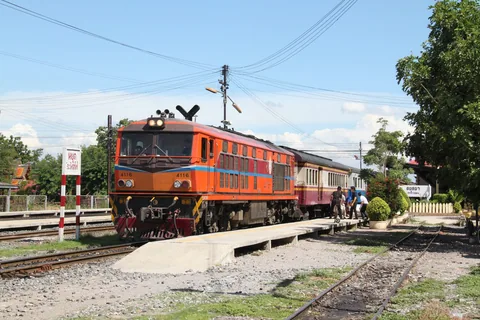
The train is one of the classic ways to travel from Bangkok to Ayutthaya. It is affordable, fairly straightforward, and gives the trip a bit of character. For many travelers, the train is part of the experience rather than just transport.
The journey is not especially long, and once you arrive, you can take a short ride from the station to the historical area. This option is good for travelers who want something simple and low-cost.
Minivan or bus
Minivans and buses are another common option. They can work well if you prefer road transport or want departure choices that fit your schedule better. Depending on traffic leaving Bangkok, road travel can be convenient, but it can also feel less relaxed than the train.
Private car or taxi
A private car or taxi gives the most flexibility. This is useful if you are traveling with family, carrying a lot of luggage, or planning to combine Ayutthaya with other stops. It is also the easiest way to avoid the small complications of stations, transfers, and local transport on arrival.
For some travelers, especially those on a tighter schedule, a private day trip from Bangkok makes practical sense.
Organized tours
Many visitors see Ayutthaya on an organized tour from Bangkok. This is convenient if you want transport, site explanations, and a structured day. The downside is that you lose freedom. You may spend less time where you want and more time moving on someone else’s schedule.
That said, for first-time visitors who want the basics covered without planning much, tours can work well.
How many days in Ayutthaya
How many days in Ayutthaya depends on what kind of traveler you are. For some people, one full day is enough. For others, Ayutthaya is better with one overnight stay.
A day trip from Bangkok works well if your main goal is to see the most famous ruins. You can leave Bangkok in the morning, visit the major temples, have lunch, and return in the evening. This is the most common choice, and it makes sense for travelers with limited time.
The downside is that Ayutthaya can feel rushed as a day trip. The city is spread out more than some visitors expect, and the heat can slow you down. If you try to fit everything into a few hours, the experience becomes more about ticking off landmarks than actually enjoying the place.
One night in Ayutthaya is often the better option if you want a more relaxed visit. Staying overnight gives you the chance to explore early or late in the day when temperatures are lower and the historical sites feel calmer. You also get time for museums, riverside dining, markets, and slower walks around the old city.
Two days in Ayutthaya can make sense if you are especially interested in Thai history, photography, temple architecture, or slow travel. In that case, you can divide the city into sections, visit more than just the most famous ruins, and enjoy the atmosphere without feeling pressed for time.
For most visitors, the practical answer is this: one full day is enough to see Ayutthaya, but one night is enough to appreciate it properly.
How to get around Ayutthaya
Once you arrive, getting around Ayutthaya is usually easy. The main historical areas are not extremely far apart, but they are not all within comfortable walking distance for a full day, especially in the heat.
Bicycles are a popular choice. Many travelers like cycling between the temple ruins because the terrain is flat and the city feels manageable. This option works best if you are comfortable cycling in warm weather and sharing space with local traffic.
Tuk-tuks are widely used and can be a practical way to move between sites. They are especially useful for shorter visits or for travelers who do not want to cycle in the midday heat.
Scooters can also be rented by some visitors, but they are not necessary for most people. Ayutthaya is easier and calmer than riding in Bangkok, but the same basic caution applies as anywhere else in Thailand.
Some travelers also use ride apps or local drivers for parts of the day, depending on availability and where they are staying.
Best time to visit Ayutthaya
Ayutthaya can be visited year-round, but the experience changes depending on the season and the weather. Because much of the sightseeing happens outdoors with limited shade, temperature matters.
The cooler months are generally more comfortable for exploring ruins and cycling between sites. During hotter periods, Ayutthaya can feel draining, especially around midday when the exposed brick ruins reflect heat and there is little protection from the sun.
Rainy season visits are still possible and can even be pleasant when the city feels greener and less dusty, but sudden rain showers can interrupt plans. The best approach in any season is to start early, rest during the hottest hours if needed, and continue later in the afternoon.
Practical information for visiting Ayutthaya
Ayutthaya is easy to visit, but a few practical details make the experience better.
Dress respectfully if you plan to enter temple areas that are still active or partly active as religious spaces. Lightweight clothing is useful because of the heat, but it is sensible to avoid overly revealing outfits.
Bring water. This sounds obvious, but it matters in Ayutthaya more than in some other destinations because sightseeing often means long stretches outdoors between ruins with little shade.
Sun protection is also important. A hat, sunscreen, and comfortable shoes make a bigger difference here than many people expect.
Cash is useful for smaller purchases, local transport, snacks, and entry fees in some places. While modern payment options are available in many parts of Thailand, it is still easier to have some cash on hand in Ayutthaya.
It is also worth planning your route a little in advance. Not because Ayutthaya is difficult, but because the experience improves when you know which temples matter most to you. Some people want the most famous photo spots. Others want the grandest ruins. Others care more about atmosphere or sunset views.
Food in Ayutthaya
Ayutthaya is not only about ruins. Food is an important part of the visit, and the city has enough local character to make meals feel like part of the destination rather than just a break between attractions.
River prawns are among the foods many visitors look for, and riverside restaurants are a popular choice. Depending on your budget, you can keep things simple or have a more substantial meal in a scenic setting. Local markets and casual eateries also give a more everyday side of the city.
If you stay overnight, Ayutthaya becomes more rewarding in this respect. You are no longer limited to a rushed lunch between temple visits and can enjoy dinner by the river or explore local food spots at a slower pace.
Is Ayutthaya worth visiting?
For most travelers interested in Thai history, culture, and major landmarks beyond Bangkok, Ayutthaya is absolutely worth visiting. It offers something very different from Thailand’s beach destinations and something more spacious and reflective than the capital.
It is also one of the few places where you can get a strong sense of the scale of old Siam without needing a complex travel plan. The city is close enough to Bangkok to be easy, but different enough to feel like a real change of scene.
Some travelers will connect most with the historical importance. Others will remember the quiet roads between temple ruins, the late afternoon light on old brick towers, or the feeling of sitting by the river after a long day in the heat. Ayutthaya does not need to be dramatic to leave an impression. That is part of why so many people who go there are glad they made room for it.