Kanchanaburi is one of those places in Thailand that feels larger than its size. It is close enough to Bangkok to work as a short trip, but it offers a very different atmosphere from the capital. The pace is slower, the scenery is greener, and the town sits near the meeting point of two rivers that shape both the landscape and the mood of the place. For many visitors, Kanchanaburi is known first for the Bridge over the River Kwai and the wartime history connected to the Death Railway. Once you arrive, though, it quickly becomes clear that the area is more than a single landmark.
This is a destination where history, nature, and everyday local life sit close together. You can spend the morning at war memorials and museums, take a train ride through dramatic countryside later in the day, and end the evening at a riverside restaurant or floating hotel. Some travelers come for the history, some for waterfalls and national parks, and some because they want a break from Bangkok without taking a flight. Kanchanaburi works for all of them.
Where Is Kanchanaburi?
Kanchanaburi is in western Thailand, not far from the border with Myanmar. The province is large, but when people talk about visiting Kanchanaburi, they usually mean Kanchanaburi town and the surrounding attractions that are easy to reach from it. The town lies around two to three hours from Bangkok depending on traffic and the type of transport you choose.
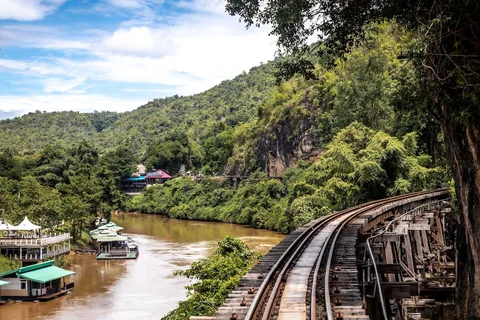
What makes the setting stand out is water. The town is closely tied to the river, and many hotels, cafés, and guesthouses make the most of that. Some places are built directly over the water on floating rafts, while others sit on the riverbank with open terraces facing the current. It gives Kanchanaburi a relaxed character that feels very different from busier Thai destinations.
The History of Kanchanaburi
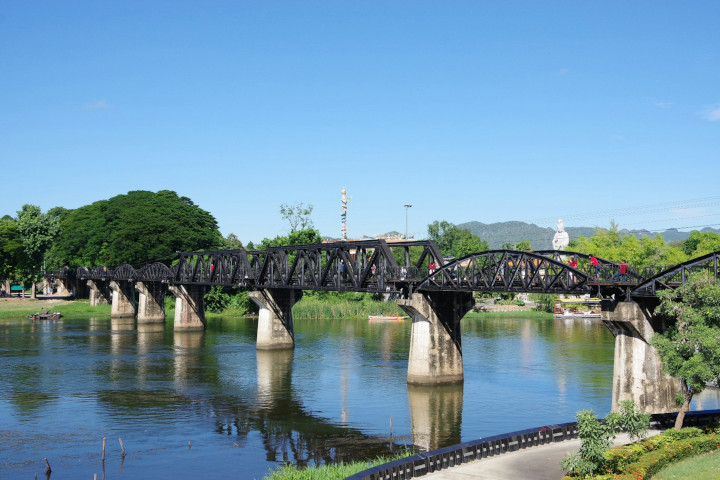
Kanchanaburi is best known internationally because of its role in the Second World War. During the Japanese occupation, prisoners of war and Asian laborers were forced to build the Siam–Burma Railway, a project that later became known as the Death Railway because of the terrible human cost. The most famous structure linked to that history is the Bridge over the River Kwai, which has become one of the best-known war sites in Southeast Asia.
That history still shapes how people experience Kanchanaburi today. The war cemeteries, museums, memorial sites, and preserved railway sections are not treated as side attractions. They are central to the identity of the place. Even travelers who come mainly for nature usually end up spending time learning about what happened here.
At the same time, Kanchanaburi is not only a memorial city. It is a living Thai town with markets, schools, local neighborhoods, temples, riverside walks, and a long history that goes beyond wartime stories. That mix is part of what makes it interesting. It is serious without feeling heavy all the time, and scenic without feeling shallow.
What Kanchanaburi Is Known For
The first thing many people associate with Kanchanaburi is the Bridge over the River Kwai. The second is the wider Death Railway story. After that come the waterfalls, caves, national parks, floating raft hotels, and the train journey toward Nam Tok. Put together, these give the area a very broad appeal.
Kanchanaburi is also known for being one of the easiest history-and-nature combinations in central Thailand. You do not need to choose between museums and outdoor scenery here. In the same trip, you can visit a war cemetery in the morning, take a long-tail boat on the river, and swim in clear pools beneath a waterfall the next day.
Bridge over the River Kwai
This is the landmark almost everyone visits first. The bridge is both a historic site and a working railway bridge, which gives it a different feel from many other memorial places. You can walk across it, stop in the small raised sections when trains pass, and look out over the river and surrounding area. It is simple in one sense, but the history behind it gives the place real weight.
Early morning is a good time to visit if you want softer light and fewer people. Late afternoon is also popular, especially when the heat starts to drop. The area around the bridge has shops, cafés, local stalls, and river views, so even people who are not deeply interested in wartime history usually spend longer here than expected.
The bridge is famous enough that some travelers worry it might feel overhyped. In reality, it remains worth seeing because of the setting and the historical significance. It is not a giant attraction in the sense of scale, but it carries a lot of meaning.
War Cemeteries and Museums in Kanchanaburi
Kanchanaburi War Cemetery is one of the most moving places in town. The grounds are very carefully maintained, and the rows of graves make the scale of the loss impossible to ignore. Even visitors who know the history beforehand often find that seeing the cemetery in person changes their understanding of it.
Chungkai War Cemetery, a little outside the center, is quieter and often less busy. It has a more peaceful feel, which some people prefer. Visiting both gives a broader sense of the wartime story and the people who were caught in it.
There are also museums in and around town that explain the construction of the railway and the conditions endured by prisoners and laborers. Some museums are more polished and easier to follow than others, but together they help place the bridge and railway in context. If you want to understand Kanchanaburi beyond taking photos, a museum visit is worth your time.
Riding the Death Railway
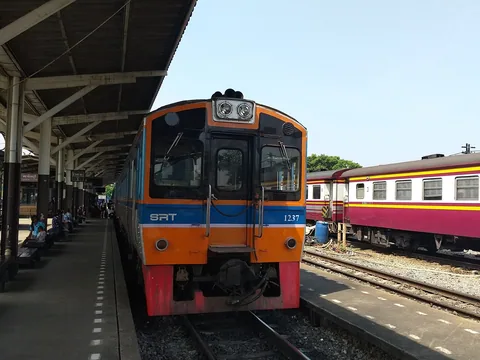
One of the best experiences in Kanchanaburi is actually taking the train. The route west from town toward Nam Tok passes through attractive countryside and includes some of the most famous surviving sections of the old railway line. The ride is not about speed or comfort. It is about the landscape, the sense of route, and the connection to history.
For many visitors, the most memorable section is around the wooden viaduct at Krasae Cave, where the train moves slowly beside the cliff with river views below. It is one of those moments that feels both scenic and unsettling because you know what the line represents.
The train is a good choice if you want a trip that feels distinctly Kanchanaburi rather than just another transfer between sights. It slows the day down and lets you experience the area in a more grounded way.
Hellfire Pass and the Deeper Wartime Story
If you have time to go farther from town, Hellfire Pass is one of the most important places to visit in the province. This is where the wartime story becomes more physical. Walking through the cuttings makes the scale of the labor clearer than any photograph can. The landscape is beautiful, but the place carries a very strong sense of what happened there.
Many travelers say Hellfire Pass leaves a deeper impression than the bridge itself. That is partly because the site feels less commercial and more direct. It strips the story back to rock, heat, distance, and hard ground. If the history is one of your main reasons for visiting Kanchanaburi, this should be high on your list.
Erawan National Park and Waterfalls
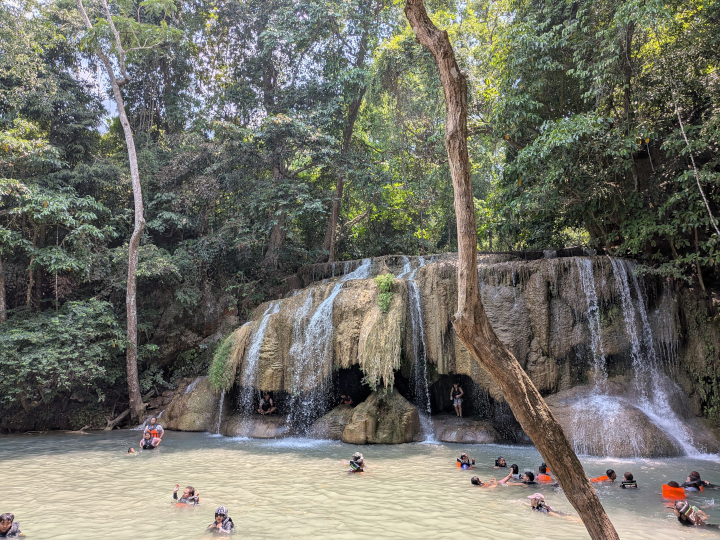
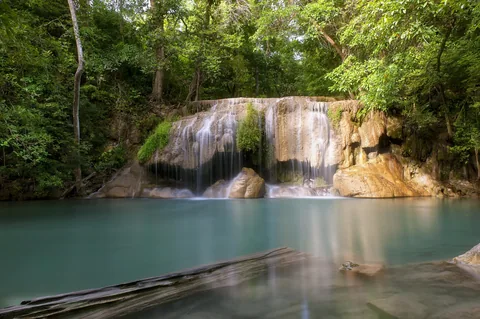
Erwan waterfalls level 2
Kanchanaburi is not only about wartime history. One of the province’s biggest natural draws is Erawan National Park, known above all for its multi-tiered waterfall and clear pools. This is one of the most popular day trips from town, and for good reason. The water has that striking blue-green color that makes people stop walking and just stare for a while. Note that the park has been closed since 27 September 2026 after flood and landslide damage, with no reopening date announced (as of October 2026), so check before you go.
The waterfall has several levels, and the walk becomes more rewarding as you go higher. Some sections are easy, while others are more demanding, especially in heat and humidity. Plenty of visitors are happy with the lower tiers, but those with decent shoes and enough time usually continue farther up.
Erawan adds a completely different side to a Kanchanaburi trip. It is not reflective and historical. It is active, green, and refreshing. If you stay more than one night, combining the bridge and war sites with Erawan is one of the best ways to see why Kanchanaburi has such broad appeal.
Other Things to See and Do in Kanchanaburi
There is enough in the area to fill several days if you like mixing well-known sights with slower travel. Some visitors choose river cruises or boat rides, especially near sunset. Others stay in raft hotels outside town, where the experience is less about sightseeing and more about the setting itself.
You can also explore local temples, small markets, and older streets in town. Pak Praek Road is one of the better areas for a walk if you want a glimpse of older buildings and a quieter side of Kanchanaburi. It will not compete with the headline attractions, but it helps round out the visit.
If you enjoy a less hurried pace, Kanchanaburi rewards that style of travel. It is a place where having space in the schedule often leads to the best parts of the trip.
How to Get to Kanchanaburi from Bangkok
Traveling from Bangkok to Kanchanaburi is straightforward, which is one of the main reasons the destination is so popular. The most common options are train, bus, minivan, private car, or an organized day tour.
The train is the most atmospheric option. It usually leaves from the Thonburi side of Bangkok and takes longer than going by road, but the journey is part of the attraction. If you want the feeling of traveling into Kanchanaburi rather than simply arriving there, the train is a good choice.
Buses and minivans are faster for many travelers and often more practical if your hotel is near the main road or bus station. A private car or taxi gives the most flexibility, especially if you want to stop at several places on the way or continue onward to waterfalls and rural stays outside the town center.
Day tours from Bangkok are common, but they tend to compress too much into one day. They work if your time is very limited, though Kanchanaburi is better when you can stay at least one night.
Getting Around Kanchanaburi
Once you are in town, getting around is usually easy. Songthaews, tuk-tuks, Grab, taxis, bicycles, motorbike rentals, and private drivers are all possible depending on where you stay and how far you plan to go. The central part of Kanchanaburi is manageable, but the wider province is large, so day trips to places like Erawan or Hellfire Pass require more planning.
If your itinerary includes several out-of-town stops, hiring a driver for the day can make sense. If you are staying close to the bridge or riverside area, you may not need much transport at all for the first day.
Where to Stay in Kanchanaburi
Kanchanaburi offers a wider range of accommodation than many first-time visitors expect. There are budget guesthouses, simple mid-range hotels, boutique riverside stays, family resorts, and floating raft hotels. The best area depends on what kind of trip you want.
Staying near the River Kwai bridge is convenient if you want easy access to restaurants, cafés, and the most visited attractions. Staying closer to the town center can feel a little more local and practical. Staying outside town, especially in a raft hotel or countryside resort, is best if you want peace, nature, and less traffic.
Many people come to Kanchanaburi for the river atmosphere, so a room with a water view is often worth it if the budget allows.
Food and the General Atmosphere
Kanchanaburi is not usually described as a food city first, but eating by the river is part of the experience. There are Thai restaurants with broad local menus, casual cafés, grilled dishes, noodle shops, and spots aimed at both Thai and foreign visitors. You do not need a detailed food plan here. The better approach is to leave room to stop where the setting looks right.
What stands out most is the atmosphere. Compared with Bangkok, Kanchanaburi feels open and breathable. The river softens the town, and even busy areas rarely feel frantic. That is one reason so many people end up staying longer than planned.
How Many Days in Kanchanaburi
Two days is a good minimum for Kanchanaburi if you want more than a rushed look at the bridge. With one overnight stay, you can visit the main war sites, walk the Bridge over the River Kwai, enjoy the riverside in the evening, and still have time for a train ride or a museum.
Three days is better if you want a fuller experience. That gives you space for one history-focused day, one nature-focused day, and one slower day to connect the two. A three-day stay makes it much easier to include Erawan National Park or Hellfire Pass without turning the trip into a checklist.
One day is possible from Bangkok, but it only works if you accept that you are seeing a narrow slice of Kanchanaburi. A day trip usually gives you the bridge, a cemetery, maybe a museum, and little else. That is enough to recognize the place, but not enough to feel it properly.
If you like quiet mornings, river views, and a mix of historical and outdoor experiences, Kanchanaburi can comfortably fill four days as well. The area has more depth than many people assume before arriving.
Is Kanchanaburi Worth Visiting?
Yes, Kanchanaburi is worth visiting, especially if you want a destination near Bangkok that offers more than one kind of experience. It is worth visiting for the history alone if the Second World War and the Death Railway interest you. It is also worth visiting if you want waterfalls, river scenery, and a trip that feels less urban without requiring a long journey.
What makes Kanchanaburi especially worthwhile is balance. Some places are only interesting for a single sight. Kanchanaburi has a famous landmark, but it also has mood, setting, and enough range to support a real short stay. It can be reflective without being gloomy, and scenic without feeling empty.
It suits first-time visitors to Thailand who want an easy side trip from Bangkok, and it also suits repeat visitors who want somewhere calmer than the beach islands or the capital. That broad usefulness is part of its strength.
Practical Information for Visitors
The best time to visit Kanchanaburi is usually during the cooler and drier part of the year, when walking around outdoor sites is more comfortable. The hot season can be intense, especially if you plan to climb around waterfalls or spend time at exposed historical locations. During the rainy season, the countryside can look especially lush, but transport and outdoor plans may be less predictable.
Comfortable shoes matter more here than in some other Thai destinations. Even if your plan is mostly historical sightseeing, you may still end up walking rail tracks, cemetery paths, museum grounds, and uneven park trails. Light clothing, water, sun protection, and insect repellent are also sensible to carry.
If you want to ride the train, it is worth checking schedules in advance rather than assuming flexible departures. If you plan to combine town sights with attractions farther out, start early. Distances in the province can look short on a map and still take time in practice.
Kanchanaburi works well for solo travelers, couples, families, and older visitors because the trip can be shaped in different ways. Some people focus on history, some on scenery, and some just want one or two quiet nights by the water with meaningful places nearby. That flexibility is one of the reasons Kanchanaburi remains one of the most dependable places to visit in central Thailand.