
Island-Hopping in Thailand
Routes, ferries and seasons for combining several islands in one trip.
Island-hopping in Thailand means choosing one sea and traveling along it in the right season: the Andaman coast (Phuket to Koh Lipe) from about November to April, or the Gulf islands (Koh Samui, Koh Phangan, Koh Tao) for most of the year except October to December. Within each group, scheduled ferries and speedboats link the islands directly, and you can buy tickets from the operators or through booking platforms.
Thailand has three island groups, and they barely connect. The Andaman islands lie off the west coast, facing the Indian Ocean. The Gulf islands lie off the east coast of the southern peninsula. The eastern islands, Koh Samet, Koh Chang, Koh Mak and Koh Kood, lie off the coast south-east of Bangkok. Moving between groups means going overland or flying, so most good trips stay within one.
This guide explains the principles: which sea when, who runs the boats, how to buy tickets, what to do with your luggage and how to stay safe on the water. Our two route guides then put them into practice: the Andaman route from Phuket to Koh Lipe and the Gulf route from Koh Samui to Koh Tao. If you have not chosen an island yet, start with which Thai island is right for you.
Island-hopping basics
- Andaman season
- Island-to-island speedboats about mid-October to end of April; November to April is safest
- Gulf season
- Boats all year; worst weather October to December
- Eastern islands
- Best November to April; Trat's islands have few boats from May to September
- Main operators
- Tigerline (Andaman); Lomprayah, Songserm, Seatran, Raja Ferry (Gulf); Boonsiri, Ko Kut Express (Trat)
- Check-in
- Usually 30 minutes before departure
Two seas, two seasons
The seasons decide everything. The Andaman coast gets the southwest monsoon: the Thai Meteorological Department's 1991–2020 averages for Phuket show rain rising sharply from May and peaking in September and October at around 350 mm a month, while January to March are dry. The Gulf islands follow a different pattern: at the Koh Samui station, October to December bring half the year's rain, with November the wettest month at about 445 mm, and June to August are relatively dry.
So the simple rule is: Andaman from November to April, Gulf from January to September, and either in January to April. The eastern islands near Trat follow the Andaman pattern even though they sit in the Gulf, with very heavy rain from May to September. Our guide to the best time for the Thai islands goes month by month.
Rain does not stop the big ferries, but it stops the small boats. In the wet months, larger ferries often keep sailing while speedboats and island-to-island routes are cut. A route that takes a morning in February can take two days in August.
Who runs the boats
Island boats in Thailand are run by private companies, not by the state. The names you will meet most:
- Andaman coast: Tigerline Ferry and its Siri Lanta speedboats, which describe themselves as the largest integrated operator on the coast, with more than 40 vessels and a network from Phuket to Koh Lipe and Langkawi. Satun Pakbara Speedboat runs routes to Koh Lipe and Langkawi.
- Gulf islands: Lomprayah (high-speed catamarans, plus buses from Bangkok), Songserm (express boats and speedboats), and Seatran and Raja Ferry (car ferries from Donsak near Surat Thani).
- Trat islands: Boonsiri High Speed Ferries, Ko Kut Express and smaller operators from Laem Sok and Laem Ngop piers.
Boat types matter. Large ferries are slower but steadier and carry luggage easily. Catamarans are fast and fairly comfortable. Speedboats are fastest and go where big boats cannot, but they are bumpy, crowded and the first to be cancelled. Songserm itself advises pregnant passengers and people with back problems against speedboats. Our guide to ferries in Thailand compares operators in more detail.
Buying tickets: operator, platform or pier
You have three options. Buying directly from the operator's website gets the official fare and the clearest information about piers and times; Tigerline and Lomprayah both stress this on their sites. Booking platforms show several operators on one screen and can combine a bus, a boat and a hotel transfer into one ticket; our article on 12Go.asia explains how that works. Travel agents and pier counters sell the same tickets on the spot, usually for cash.
When should you book ahead? In the peak months (December to February, and Thai and Chinese holiday periods), book a few days ahead for the popular legs and for any boat that runs only once or twice a day, such as the southbound boats to Koh Lipe. On short, frequent routes, like Koh Samui to Koh Phangan, buying on the day is usually fine.
Read the conditions before you pay. As an example, Boonsiri's terms (from 1 March 2026) give an 80 % refund only for cancellations made at least seven days ahead, treat a missed boat as a no-show with no refund, and allow the company to change schedules for weather without covering your extra costs. Other operators have similar rules, which is one reason to have travel insurance that covers missed connections.
Luggage: pack for a small boat
Speedboats have little space, and bags usually travel in the bow or on deck, where they can get wet. Songserm's advice is to pack light and keep valuables in waterproof bags. A soft bag or backpack is easier than a hard suitcase when you have to climb from a speedboat into a longtail boat at a beach or floating pontoon.
- Keep passport, phone, cash and medication in a small dry bag you carry yourself.
- Put electronics in plastic bags inside your main bag.
- Check limits: Seatran's site warns that passengers with large suitcases may have to buy an extra seat on some services, and Boonsiri limits its liability for lost or damaged baggage to 2,000 baht and excludes electronics and valuables.
- Label your bag with your name and destination pier.
Safety on the water
Most crossings are uneventful, but accidents happen. The UK FCDO notes that boats between the mainland and the islands have sunk or collided, and that accidents are usually caused by overloading, poor maintenance or rough seas, particularly in the monsoon. Practical rules follow from that:
- Do not board a boat that looks overloaded, and know where the life jackets are.
- Accept cancellations. If an operator stops sailing for weather, do not look for someone willing to go anyway.
- Leave a spare day before international flights, especially in the wet season.
- Sit near the back of a speedboat if you get seasick; the front bounces most.
Park fees are charged per park, not per island. Many islands lie in national parks, and foreign adults pay 200 baht in most of them, 300 or 400 baht in a few "special zones" such as Phi Phi (rates as of October 2026). Carry cash, keep the receipt and do not buy park tickets from agents on the mainland.
Routes to start from
Our route guides give the order, the boat legs and how many nights to spend. The Andaman route runs Phuket, Phi Phi, Koh Lanta, the Trang islands and Koh Lipe in about two weeks. The Gulf route runs Koh Samui, Koh Phangan and Koh Tao in ten days to two weeks. For a shorter trip from Bangkok, the eastern islands work well: in the dry season speedboats link Koh Chang, Koh Mak and Koh Kood. All island guides are listed on our Thai islands page.
Frequently asked questions
What is the best month for island-hopping in Thailand?
January to April suits both coasts. For the Andaman islands, choose November to April; for the Gulf islands, avoid October to December, when Koh Samui gets about half its annual rain. The eastern islands near Trat are best from November to April.
Should I book ferry tickets in advance?
For routes with one or two departures a day, and for travel in December to February, book a few days ahead. On frequent short crossings, such as Koh Samui to Koh Phangan, you can usually buy on the day at the pier or from an agent.
Can I island-hop between the Andaman Sea and the Gulf?
Not by boat in one hop. The two coasts are on opposite sides of the peninsula, so you travel overland, usually via Surat Thani, or fly. Combined bus-and-boat tickets exist, but it is a full day of travel.
Are speedboats safe in Thailand?
Most trips are fine, but speedboats are bumpy and the most affected by weather. The UK FCDO notes accidents caused by overloading, poor maintenance and rough seas. Choose established operators, check the life jackets and accept weather cancellations.
Sources
- Tigerline Ferry and Siri Lanta Speedboat – Network and pricing structure (checked October 2026)
- Lomprayah High Speed Ferries – Routes and journey times (checked October 2026)
- Songserm – Speedboat travel tips and island-hopping (checked October 2026)
- Seatran Ferry – Services and passenger notices (in Thai) (checked October 2026)
- Boonsiri High Speed Ferries – Timetable and conditions of service (checked October 2026)
- Satun Pakbara Speedboat – Timetable 2026–2027 (checked October 2026)
- Thai Meteorological Department – Climatological data 1991–2020 (checked October 2026)
- UK FCDO – Thailand: safety and security (sea travel) (checked October 2026)
- Kapook – National park fees by category, citing the DNP (in Thai) (checked October 2026)
4 guides in this section.
Island-hopping
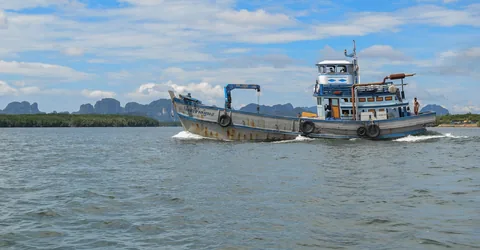
An Andaman Island-Hopping Route: Phuket to Koh Lipe
Phuket, Phi Phi, Lanta, the Trang islands and Koh Lipe in two weeks, by speedboat and ferry.

A Gulf Island-Hopping Route: Koh Samui, Koh Phangan and Koh Tao
The order, the ferries and how many nights on each island.

Which Thai Island Is Right for You?
Families, couples, divers, backpackers or a short break from Bangkok.
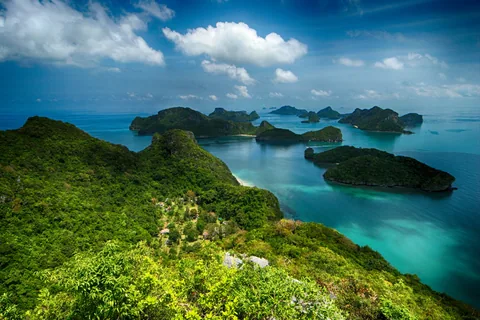
How Many Islands Does Thailand Have? The Largest Islands Ranked
The official count of 936 islands, the six largest, and how they split between two seas.
Photos in this list: photographer and licence for each image are listed on our image credits page.